Water Clean Up: 7 Essential Steps for Property Restoration

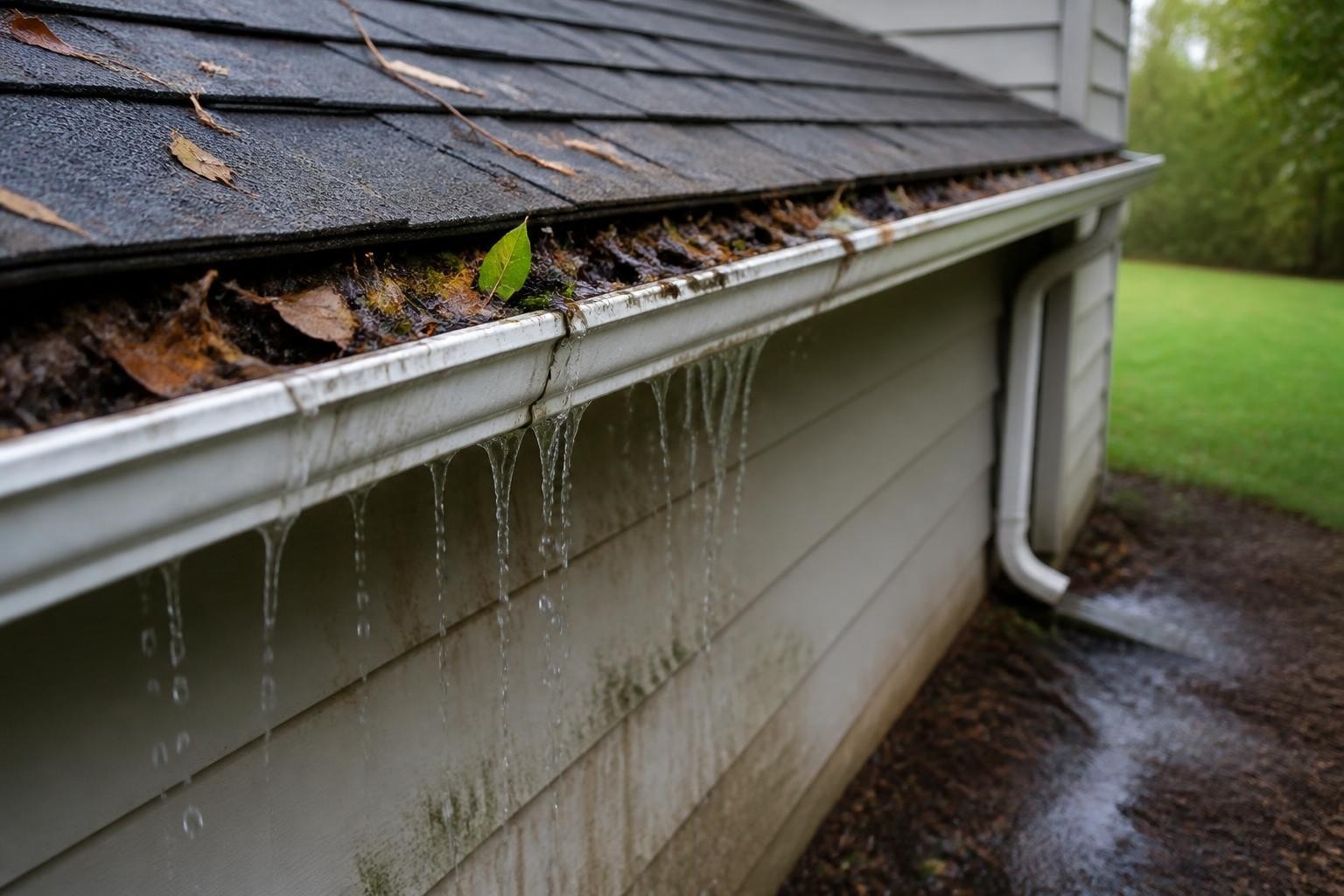
Water damage strikes without warning, transforming homes and businesses into disaster zones within hours. Whether caused by burst pipes, severe storms, or appliance failures, the aftermath requires immediate action and systematic restoration. Understanding the water clean up process empowers property owners to respond effectively, minimize damage, and restore their spaces to pre-loss condition. The following steps outline the comprehensive approach professionals use to tackle water emergencies and ensure thorough recovery.
1. Immediate Safety Assessment and Damage Evaluation
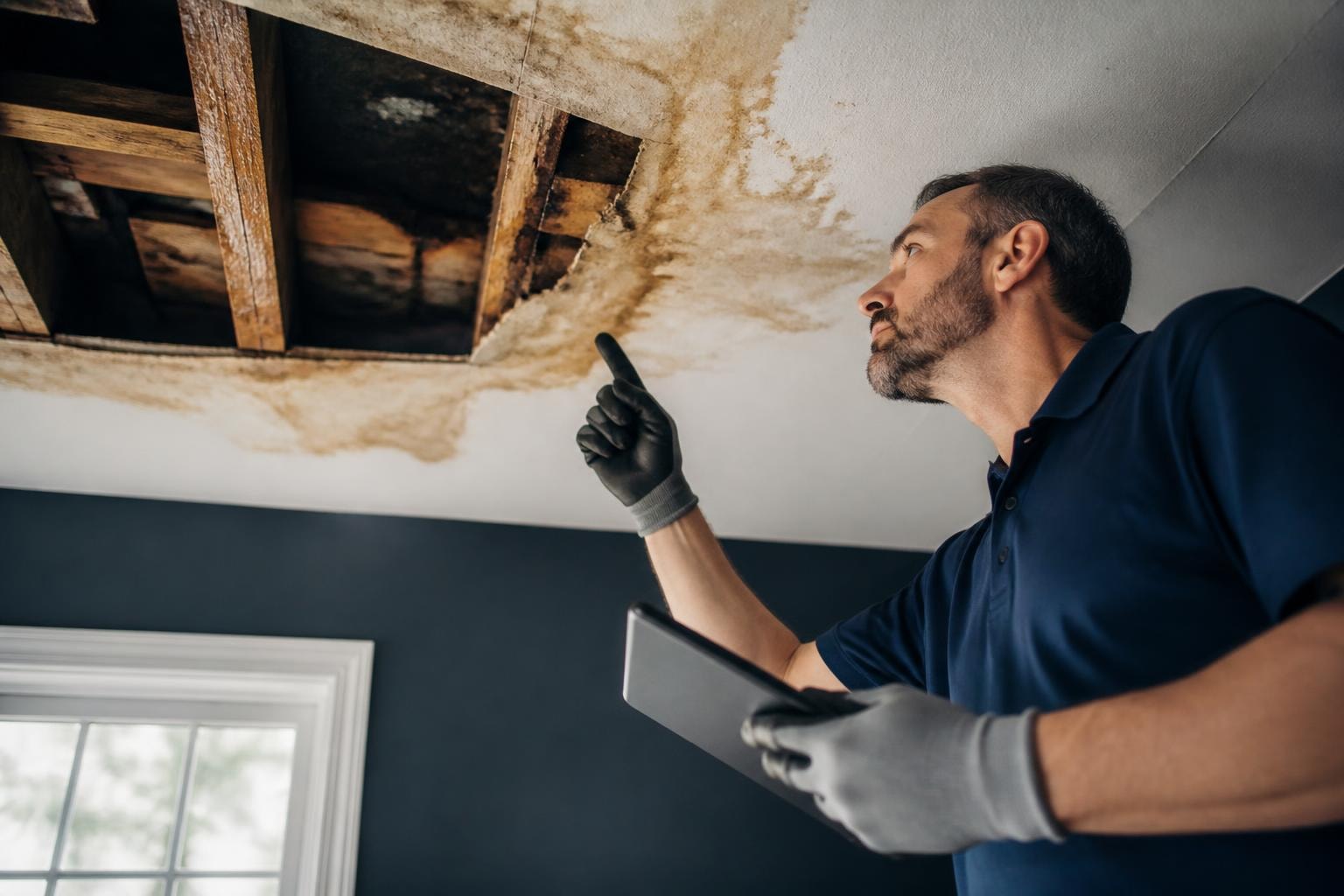
Before beginning any water clean up efforts, safety must take priority. Standing water poses multiple hazards including electrical shock risks, structural instability, and contamination from sewage or chemicals. Property owners should never enter flooded spaces without first shutting off electricity at the main breaker and identifying potential dangers.
Categorizing Water Damage
Professional restoration teams classify water damage into three distinct categories:
The Washington State Department of Health provides detailed safety guidelines for approaching flooded structures and understanding contamination risks. Category 3 water requires extensive protective equipment and specialized training.
Documenting the Extent
Thorough documentation supports insurance claims and guides restoration planning. Take photographs and videos of all affected areas, damaged belongings, and water lines on walls. Create detailed inventories of damaged items including approximate ages and replacement values.

2. Water Extraction and Removal
Speed determines success in water clean up operations. The longer water remains in contact with building materials and furnishings, the greater the damage becomes. Professional-grade extraction equipment removes standing water far more effectively than household wet vacuums or mops.
Extraction methods vary based on water volume and affected materials:
Extraction MethodBest ForEquipment UsedTruck-mounted extractorsLarge-scale floodingHigh-powered vacuum trucksPortable extractorsModerate water volumeCommercial wet/dry vacuumsSubmersible pumpsDeep standing waterElectric or gas-powered pumpsWeighted extractorsCarpets and upholsterySpecialized carpet extraction tools
Industrial extractors can remove thousands of gallons per hour, dramatically reducing drying time and preventing secondary damage. For properties requiring professional water damage restoration services, trained technicians arrive with specialized equipment designed for rapid water removal.
Addressing Hidden Water Pockets
Water migrates through building materials, collecting in unexpected locations. Technicians use moisture meters and thermal imaging cameras to detect water trapped inside walls, beneath flooring, and within ceiling cavities. These hidden pockets become breeding grounds for mold if left unaddressed during water clean up.
3. Structural Drying and Dehumidification
After extraction, affected materials retain significant moisture that requires systematic removal. The drying process follows scientific principles of evaporation and dehumidification, carefully controlled to prevent warping, cracking, or mold growth.
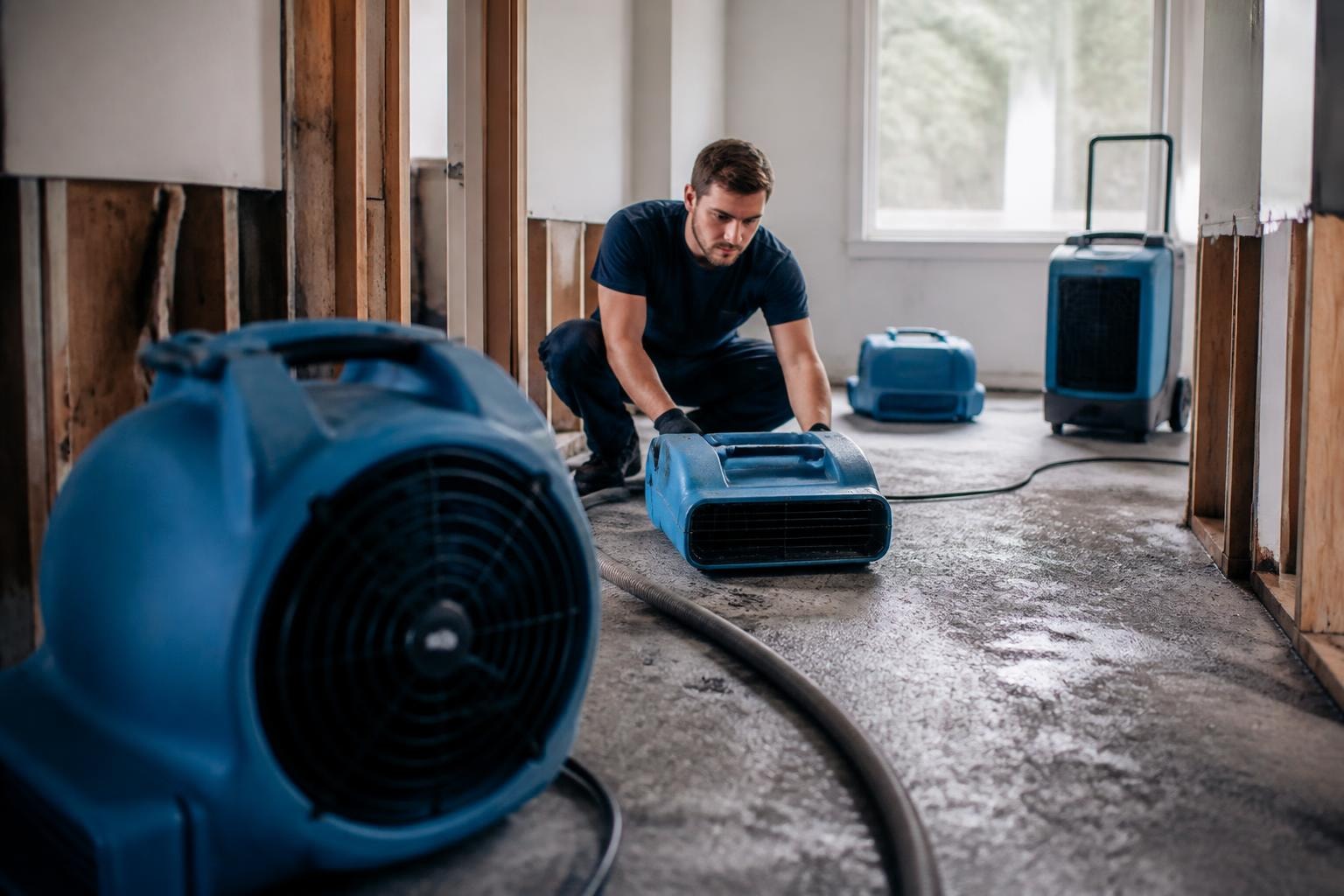
Professional drying employs multiple equipment types working in concert. Air movers create rapid airflow across wet surfaces, accelerating evaporation. Dehumidifiers capture moisture from the air, preventing it from being reabsorbed by materials. The combination creates optimal drying conditions regardless of outdoor weather.
Monitoring Moisture Levels
Effective water clean up requires constant monitoring using precision instruments:
Drying typically requires 3-7 days depending on materials affected, water category, and environmental conditions. The Home Depot's comprehensive guide to water damage restoration explains how different materials respond to drying processes and why professional monitoring ensures complete moisture removal.

4. Content Removal and Restoration
Water affects more than just building structures. Personal belongings, furniture, electronics, documents, and irreplaceable items require specialized treatment during water clean up. Restoration professionals categorize contents based on salvageability and restoration potential.
Salvage Categories
Items removed from water exposure within 24-48 hours often survive with proper cleaning and drying. Furniture, clothing, books, and electronics may be restored using specialized techniques.
Contents with significant water exposure need professional restoration including cleaning, deodorization, and sanitization. Upholstered furniture requires extraction and antimicrobial treatment, while documents may need freeze-drying.
Category 3 water contamination, extended exposure time, or material composition may render items beyond restoration. Porous materials like mattresses and carpets exposed to sewage require disposal.
Content restoration specialists use various techniques:
5. Antimicrobial Treatment and Sanitization
All water clean up projects require thorough sanitization to eliminate bacteria, viruses, and prevent mold growth. Even clean water becomes contaminated after contact with building materials and household items. Professional restoration includes comprehensive antimicrobial applications as standard protocol.
Treatment approaches vary based on water category and affected materials. EPA-registered antimicrobial solutions kill existing microorganisms while inhibiting future growth. Application methods include:
Treatment TypeApplication MethodPrimary PurposeSurface disinfectantsSpray and wipeEliminate bacteria and virusesAntimicrobial coatingsSpray applicationPrevent mold growthHEPA air scrubbingFiltration unitsRemove airborne contaminantsFoggersAerosol dispersalReach inaccessible areas
The CDC's natural disaster safety guidelines emphasize the importance of proper sanitization following flood events, particularly for surfaces that contact food or children. Following severe water events, properties may also require mold remediation services if growth has already begun.
Preventing Future Mold Growth
Mold spores exist everywhere but require moisture to colonize. Proper water clean up prevents growth by eliminating moisture sources and applying preventive treatments. Materials must reach specific moisture content levels before reconstruction begins. Wood should measure below 15% moisture content, while concrete and masonry require even lower levels.
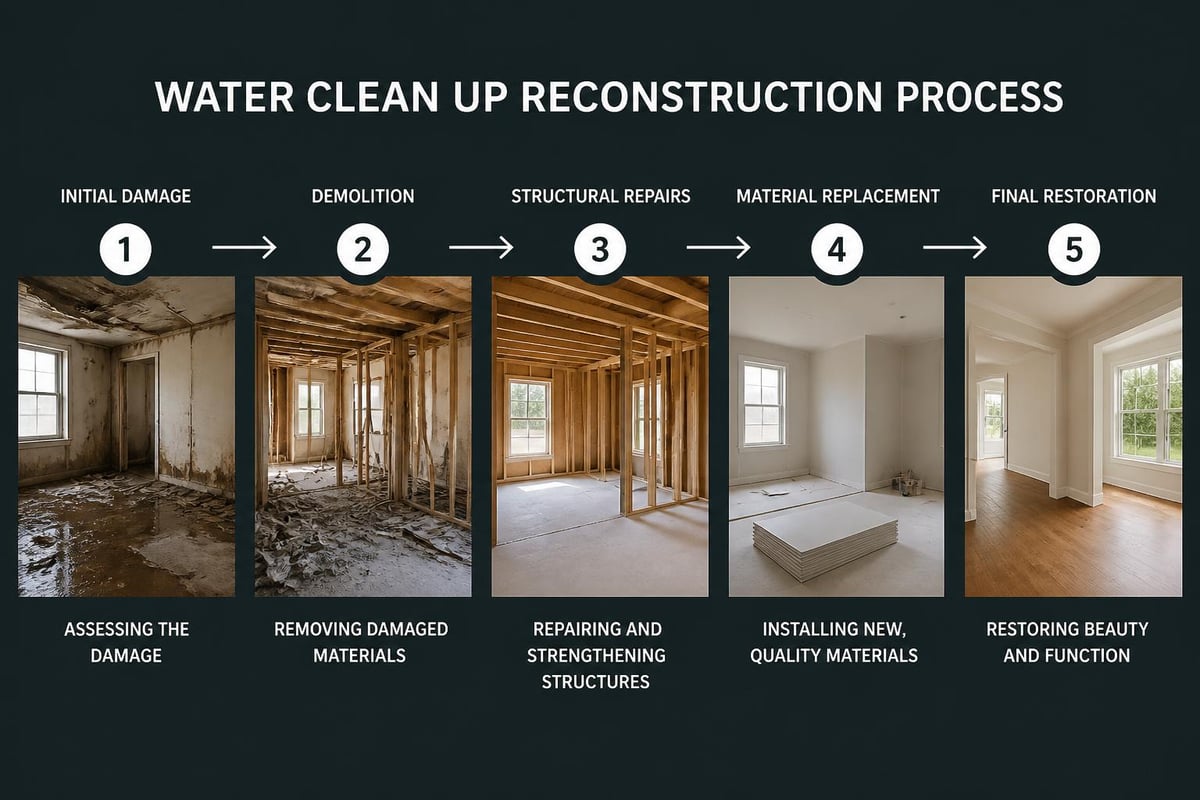
6. Structural Repairs and Reconstruction
Once all moisture has been eliminated and affected areas sanitized, reconstruction restores the property to pre-loss condition. The extent of repairs depends on damage severity and how quickly water clean up began after the initial event.
Common Reconstruction Needs
Properties with rapid response often require minimal reconstruction. This might include replacing baseboards, repainting walls, and reinstalling carpeting.
Extended water exposure necessitates more extensive work including drywall replacement, subflooring repairs, and cabinet restoration.
Severe flooding or delayed water clean up may require gutting affected areas to studs, replacing insulation, addressing structural damage, and complete rebuilding.
Reconstruction follows a logical sequence:
Professional restoration teams coordinate with licensed contractors, electricians, and plumbers to ensure all work meets building codes. For properties affected by multiple disaster types, comprehensive disaster restoration services address all aspects of recovery.
7. Insurance Documentation and Claims Support
Navigating insurance claims adds complexity to water clean up projects. Proper documentation from the start ensures fair compensation and smooth claims processing. Professional restoration companies work directly with insurance adjusters, providing detailed reports, photographs, and moisture readings that substantiate claims.
Essential Documentation Elements
Comprehensive records include:
Insurance policies vary in coverage for water damage. Understanding your policy's specific provisions for water clean up helps set realistic expectations. Most policies cover sudden and accidental water damage but exclude flooding, which requires separate flood insurance.
Working with restoration professionals experienced in insurance claims streamlines the process significantly. They communicate in industry terminology insurers understand, provide accurate estimates, and document all work according to insurance standards. For property owners seeking guidance, reviewing water damage restoration costs helps understand typical expense ranges and coverage considerations.
Third-Party Verification
Independent hygienists or indoor air quality specialists may conduct post-restoration testing to verify complete drying and absence of microbial growth. These clearance certificates provide peace of mind and documentation for insurance purposes, confirming the property is safe for reoccupation.
Professional water clean up requires specialized knowledge, equipment, and experience that extends far beyond simple water removal. Quick Dry Restoration's detailed process overview emphasizes how controlling moisture and preventing microbial growth form the foundation of successful restoration. Each step builds upon the previous one, creating a comprehensive approach that addresses immediate damage while preventing long-term problems.
Emergency response time significantly impacts overall restoration success. Properties receiving professional attention within the first 24-48 hours typically experience less damage, lower costs, and faster recovery compared to delayed response. For homeowners facing basement leak repairs or dealing with a flooded crawl space, immediate action prevents minor issues from escalating into major restoration projects.
The complexity of water clean up increases with certain property features and damage scenarios. Multi-story structures require consideration of water migration between floors. Properties with finished basements face unique challenges as water tends to collect in lower levels. Historic buildings need specialized approaches that preserve architectural features while achieving thorough drying.
Seasonal factors also influence water clean up strategies. Winter water damage often involves frozen pipe bursts, requiring additional heating during drying. Understanding how to prevent frozen pipes helps property owners avoid winter water disasters. Spring flooding presents different challenges, particularly in regions prone to snowmelt and heavy precipitation. Preparing for spring flood risks reduces vulnerability and improves emergency response readiness.
Commercial properties face additional considerations during water clean up. Business interruption costs mount quickly, making rapid restoration essential. Commercial spaces often house sensitive equipment, inventory, and documents requiring specialized handling. Multi-tenant buildings need coordination to prevent water migration affecting uninvolved parties.
Technology continues advancing water clean up capabilities. Modern moisture detection identifies hidden water that would have gone unnoticed decades ago. Advanced drying equipment achieves results in days that previously took weeks. Antimicrobial treatments offer superior protection compared to older methods. These innovations reduce costs, improve outcomes, and minimize property owner inconvenience.
Understanding these seven essential water clean up steps prepares property owners to respond effectively when disaster strikes. Whether addressing minor leaks or major flooding, systematic restoration following professional protocols ensures complete recovery while preventing long-term complications like mold growth and structural deterioration. With over 19 years of experience serving the Walla Walla Valley and surrounding areas, CORE Restoration provides 24/7 emergency response for water damage events of any scale, combining advanced equipment with proven expertise to restore your property efficiently while working directly with your insurance company throughout the process.