Restoration of Water Damage: A Complete Guide for 2026
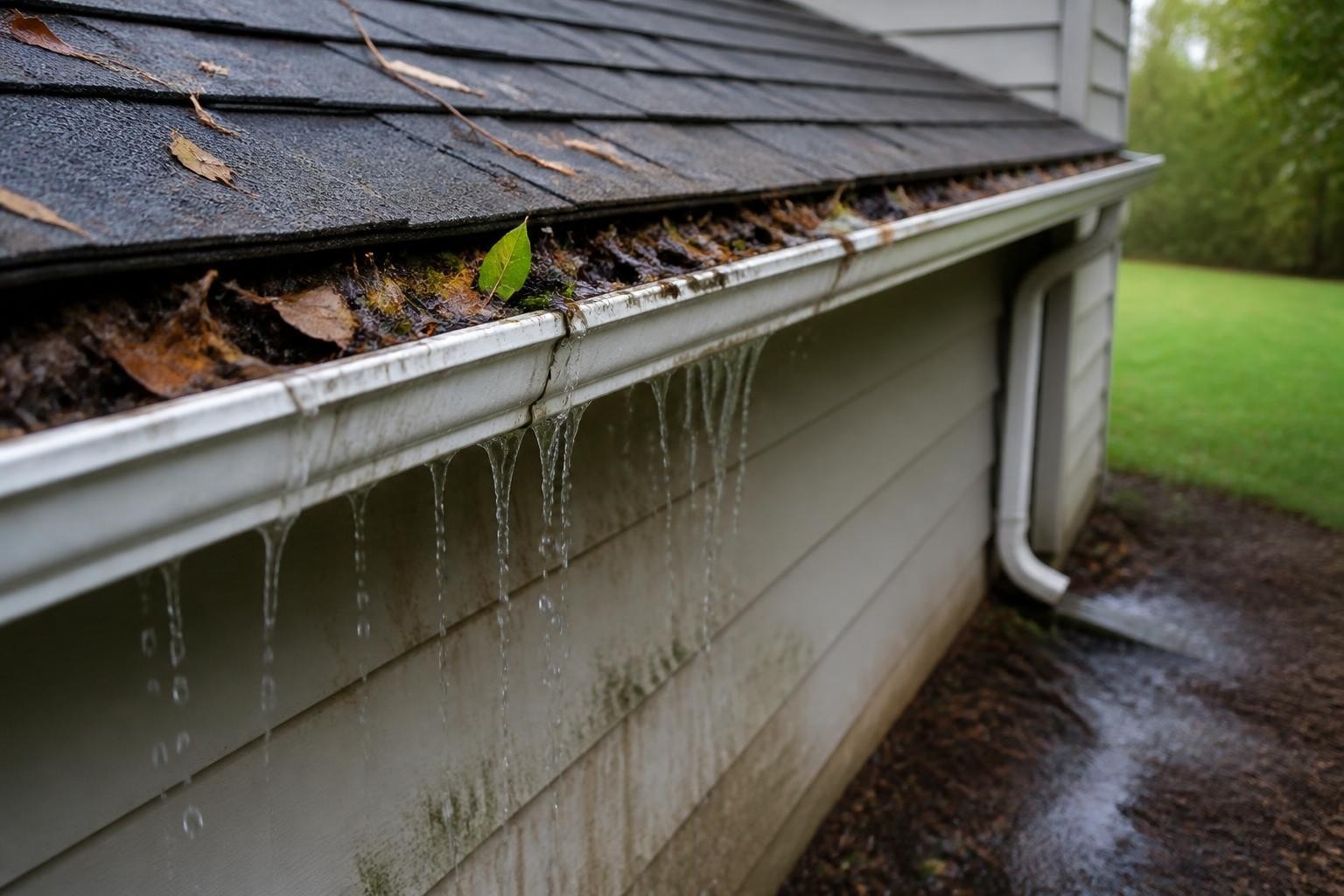
Water damage strikes without warning, transforming your property from safe haven to disaster zone in moments. Whether caused by burst pipes, severe storms, sewage backups, or appliance failures, water intrusion demands immediate action to prevent further destruction. The restoration of water damage is a complex, multi-phase process that requires professional expertise, specialized equipment, and careful planning to return your property to its pre-loss condition. Understanding what this process entails helps property owners make informed decisions during stressful situations and ensures they work with qualified professionals who follow industry best practices.
1. Emergency Response and Initial Contact
The first moments after discovering water damage are critical. Time is your greatest enemy when dealing with water intrusion, as standing water continues to spread and penetrate deeper into building materials with each passing hour.
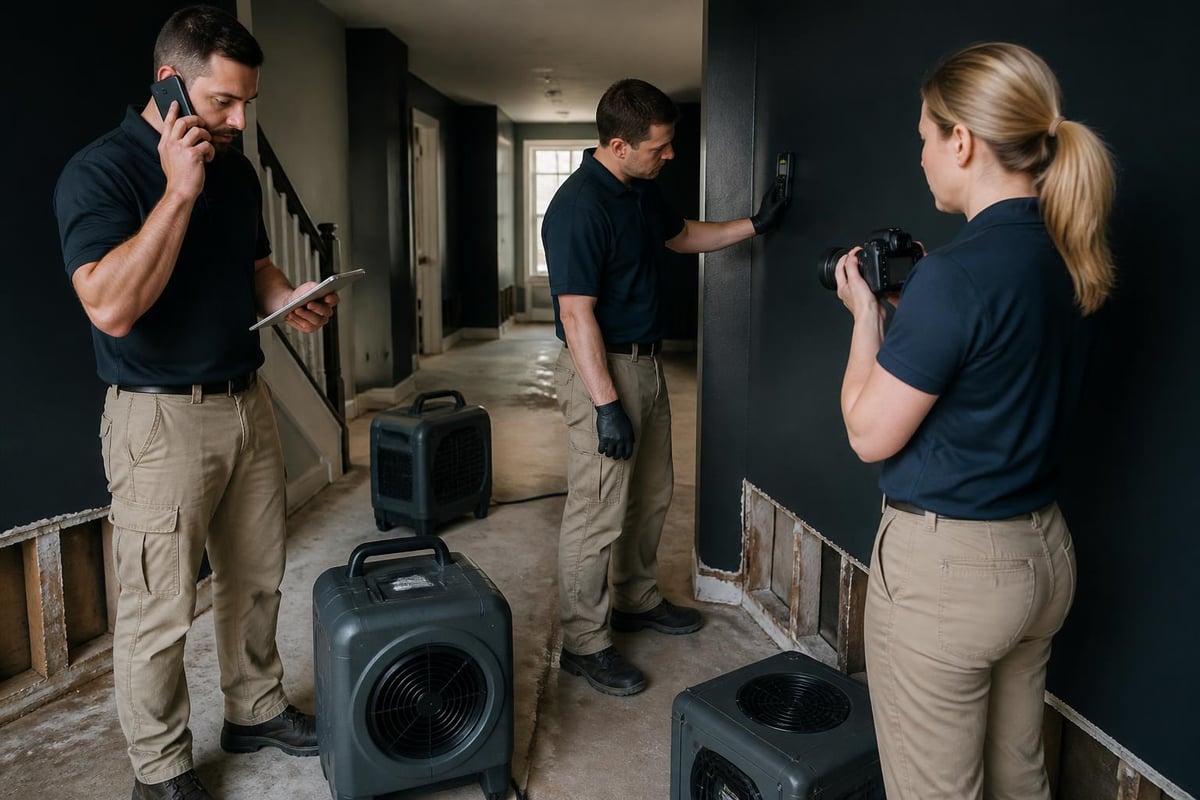
When you contact a professional restoration company, they should dispatch a team within hours, not days. CORE Restoration offers 24/7 emergency response because water damage doesn't wait for business hours. During the initial phone call, technicians gather essential information:
- Source of water (clean, gray, or black water)
- Extent of visible damage
- Safety concerns (electrical hazards, structural instability)
- Property accessibility
This information helps crews arrive prepared with appropriate equipment and safety gear. Emergency response teams prioritize immediate safety hazards, such as shutting off electricity in affected areas and identifying structural concerns that could pose risks to occupants or restoration workers.
Critical First Steps
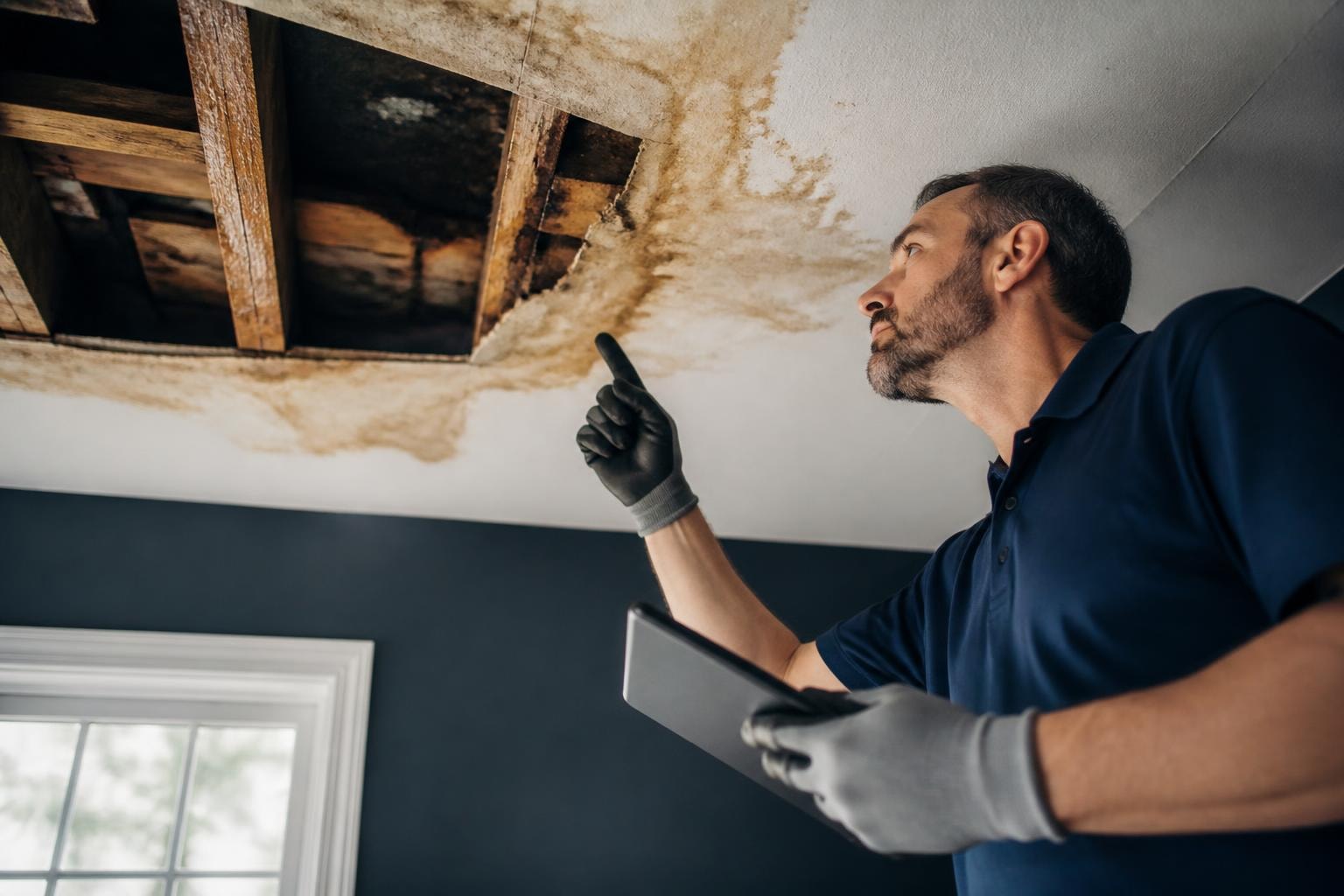
Professional teams begin by documenting the damage through photographs and detailed notes. This documentation serves multiple purposes: insurance claims, project planning, and progress tracking. Technicians create a moisture map identifying all affected areas, including hidden damage behind walls or under flooring.
Safety protocols take precedence over everything else. Teams assess whether the building is safe to enter and work in, checking for compromised structural elements, electrical hazards, and contamination risks. Category 3 water damage (sewage or floodwater) requires specialized protective equipment and decontamination procedures.
2. Water Extraction and Removal
Once safety is established, the restoration of water damage moves to removing standing water as quickly as possible. Every minute water remains increases damage severity and restoration costs.
| Extraction Method | Best For | Capacity |
|---|---|---|
| Truck-mounted extractors | Large commercial spaces | 200+ gallons/minute |
| Portable extractors | Residential properties | 50-100 gallons/minute |
| Submersible pumps | Basements, deep flooding | 1,500+ gallons/hour |
| Wet vacuums | Small areas, final cleanup | 10-15 gallons capacity |
Professional-grade extraction equipment removes water far more efficiently than consumer-grade tools. According to The Home Depot's water damage restoration guide, proper extraction is the foundation of successful restoration. Technicians work systematically, starting with the deepest water and moving outward.
Beyond Surface Water
Extraction doesn't stop when visible water disappears. Porous materials like carpet padding, drywall, and insulation act as sponges, holding significant moisture even after surface water is gone. Specialized extractors apply pressure and suction to pull water from these materials.
Technicians measure moisture levels using hygrometers and moisture meters throughout extraction. These readings establish baseline measurements for tracking drying progress. Areas that remain saturated after extraction may require removal and replacement rather than drying, particularly with heavily contaminated materials.
The speed of water extraction directly impacts the restoration of water damage timeline and costs. Materials exposed to water for less than 24 hours have significantly better salvage rates than those saturated for 48 hours or longer.
3. Structural Drying and Dehumidification
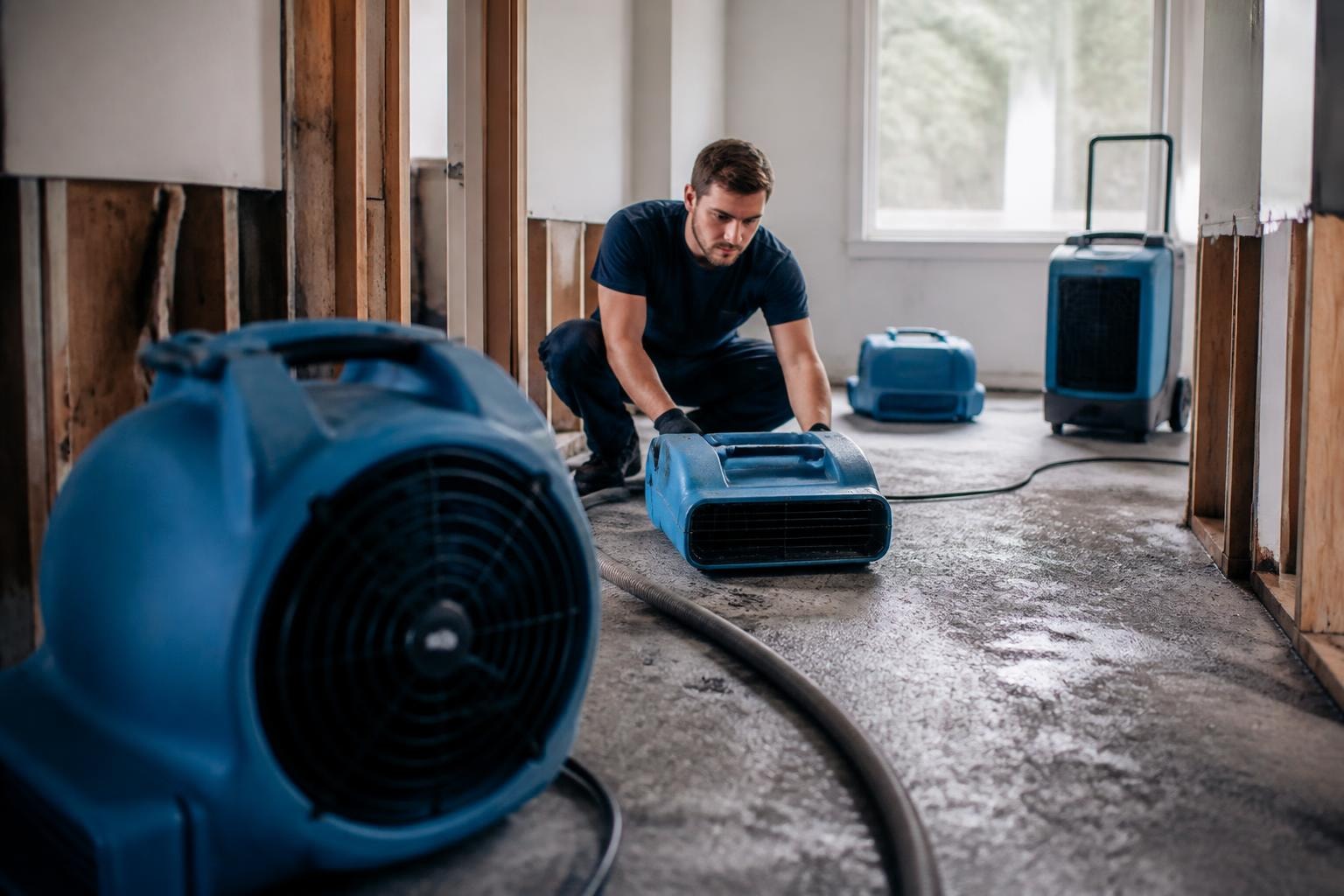
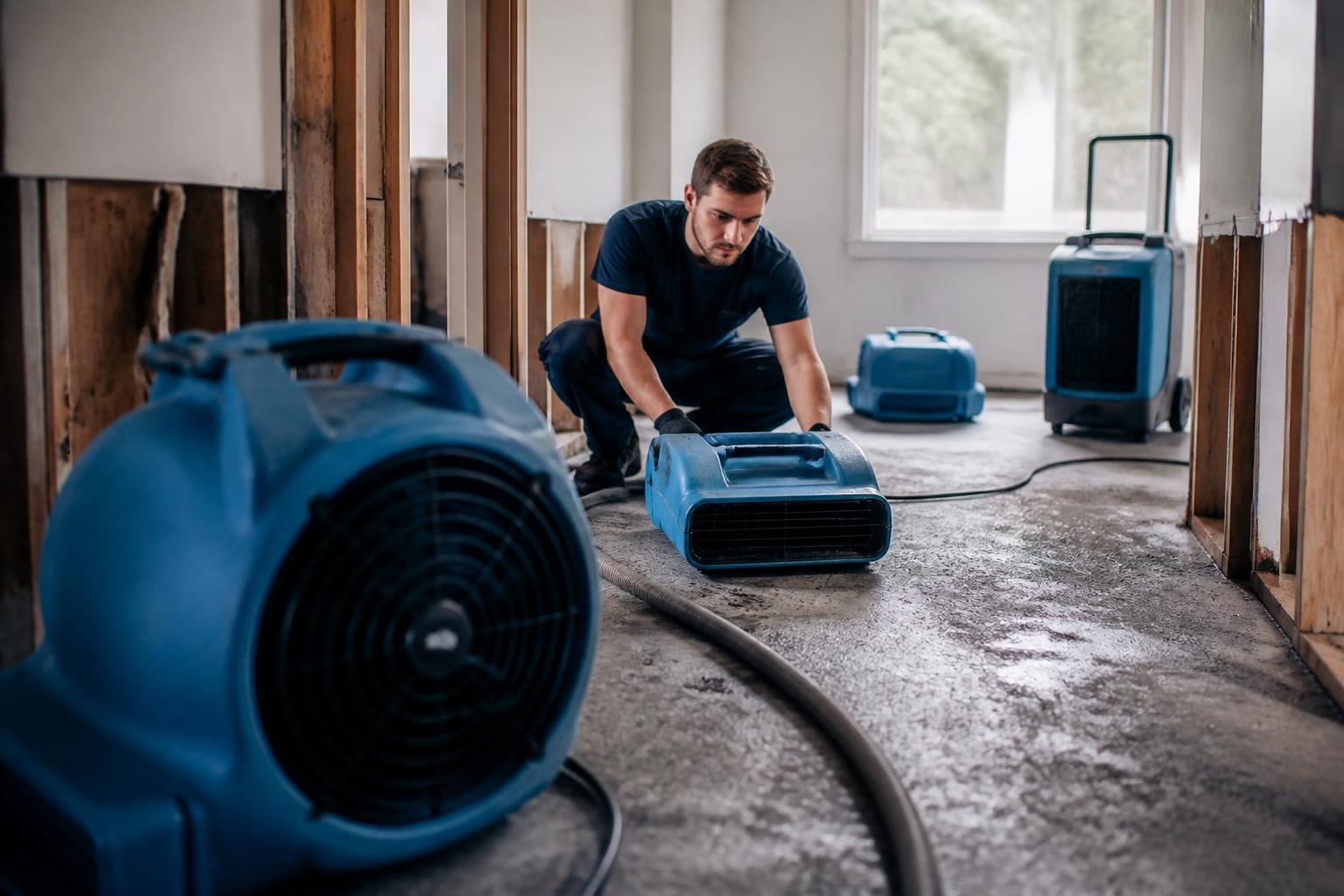
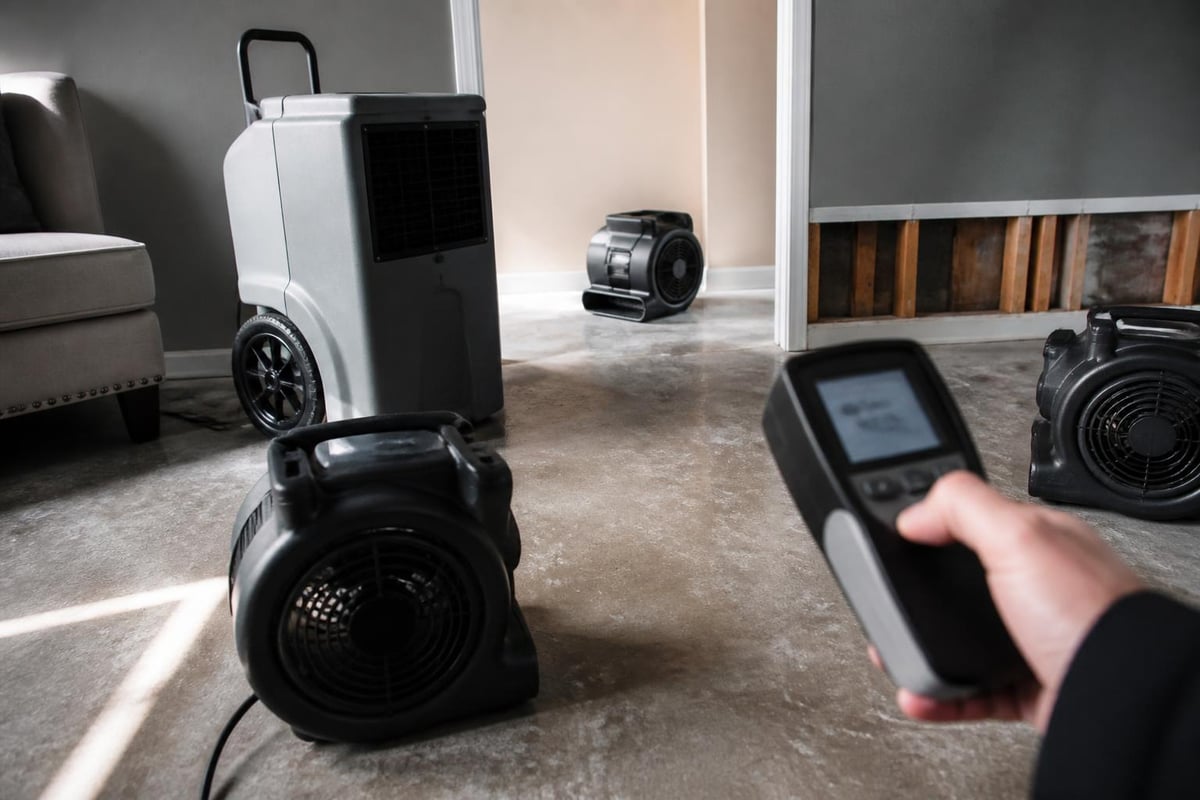
After extraction, the restoration of water damage enters its most technical phase. Structural drying requires understanding psychrometrics (the science of air and moisture relationships) and proper equipment deployment.
Professional drying creates controlled conditions that accelerate evaporation:
- Temperature elevation increases evaporation rates
- Air movement carries moisture away from wet surfaces
- Dehumidification removes moisture from the air
- Monitoring ensures steady progress toward drying goals
Equipment Deployment Strategy
Restoration professionals strategically position equipment based on moisture readings, airflow patterns, and building layout. Best practices for water damage restoration emphasize the importance of proper equipment placement for efficient drying.
| Equipment Type | Purpose | Coverage Area |
|---|---|---|
| Axial air movers | Surface evaporation | 300-400 sq ft |
| Low-grain refrigerant dehumidifiers | Moisture removal (cold conditions) | 1,000-2,000 sq ft |
| Desiccant dehumidifiers | Deep drying, commercial spaces | 2,000-4,000 sq ft |
| Injectidry systems | Wall cavities, hardwood floors | Targeted areas |
Proper drying typically takes three to five days, though extensive damage or unfavorable conditions may require longer periods. Technicians visit daily to download moisture data, adjust equipment, and document progress. Premature equipment removal is a common mistake that leads to secondary damage and mold growth.
4. Cleaning, Sanitizing, and Deodorizing
Water damage rarely involves just water. Contaminants, bacteria, and odors require specialized cleaning and sanitization procedures during the restoration of water damage process.
Cleaning Protocols by Water Category
Different water sources demand different approaches:
Category 1 (Clean Water): Originates from sanitary sources like supply lines. Requires standard cleaning and disinfection of affected surfaces and contents. While initially clean, Category 1 water becomes Category 2 after 24-48 hours due to microbial growth.
Category 2 (Gray Water): Contains contaminants from sources like washing machines or toilet tanks (no feces). Demands antimicrobial treatments and careful handling of porous materials. Many items require disposal rather than cleaning.
Category 3 (Black Water): Highly contaminated from sewage or flooding. Requires complete sanitization protocols with EPA-registered disinfectants. Most porous materials must be removed and disposed of following biohazard procedures. For severe contamination, trauma and biohazard cleanup specialists may be necessary.
Content Restoration
Furniture, documents, electronics, and personal belongings require individual assessment. Professional restoration companies employ specialized techniques:
- Ultrasonic cleaning for detailed items
- Freeze-drying for documents and photographs
- Ozone treatment for odor removal
- HEPA vacuuming for particle removal
Understanding water damage restoration costs helps property owners make informed decisions about which items to restore versus replace. Sometimes replacement is more cost-effective than extensive restoration efforts.
5. Mold Prevention and Remediation
Mold growth begins within 24-48 hours of water exposure, making prevention a critical component of the restoration of water damage. Professional teams take proactive measures throughout the entire process.
Prevention strategies include:
- Rapid water extraction within 24 hours
- Maintaining relative humidity below 60%
- Removing non-salvageable materials promptly
- Applying antimicrobial treatments to at-risk surfaces
- Continuous moisture monitoring
Despite best efforts, some situations develop mold before restoration begins or in hidden areas. The water damage restoration process according to IICRC S500 standards includes mold assessment protocols. When mold is discovered, it requires immediate attention through professional mold remediation services.
Hidden Moisture Detection
Advanced technology identifies moisture trapped behind walls, under flooring, and in ceiling cavities:
| Technology | Application | Advantage |
|---|---|---|
| Infrared cameras | Wall cavities, ceiling inspection | Non-invasive detection |
| Moisture meters | Wood, drywall, concrete | Precise moisture content readings |
| Hygrometers | Air moisture levels | Environment monitoring |
| Thermal imaging | Large-area scanning | Quick identification of problem areas |
These tools prevent the common mistake of focusing only on visible damage while hidden moisture creates long-term problems. Property owners dealing with ongoing moisture issues, such as basement leak repair needs, benefit from comprehensive moisture detection during restoration.
6. Repairs and Reconstruction
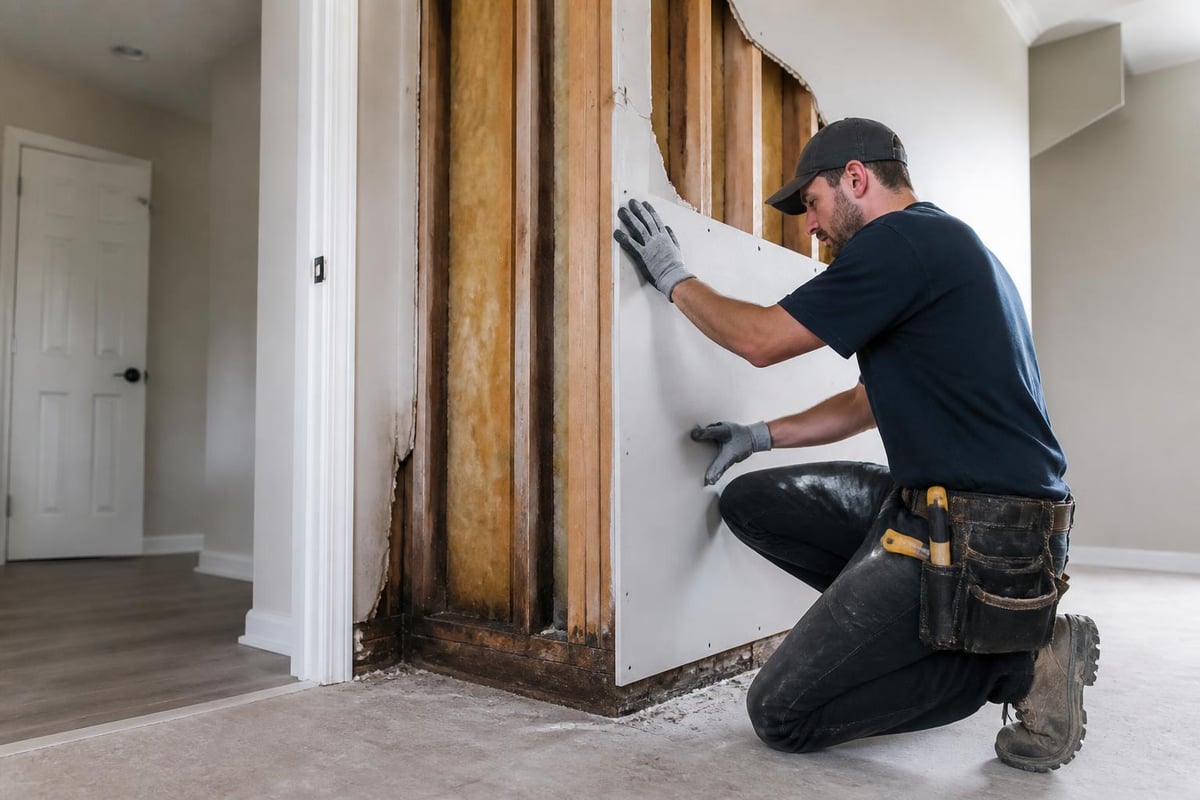
The final phase of the restoration of water damage involves returning your property to its pre-loss condition or better. This stage varies dramatically depending on damage severity.
Minor Repairs
Limited water exposure may require only:
- Carpet reinstallation after drying
- Paint touch-ups on dried drywall
- Baseband replacement
- Minor flooring repairs
These projects typically complete within days after structural drying finishes. Property owners can often remain in their homes with minimal disruption.
Major Reconstruction
Extensive damage from flooded crawl spaces or severe storms may necessitate:
- Complete drywall removal and replacement
- Subfloor replacement
- Electrical system repairs
- Plumbing system restoration
- Cabinet and fixture reinstallation
- Complete interior repainting
Storm damage restoration often combines water damage repairs with wind damage, roof repairs, and other weather-related destruction. Coordination becomes essential when multiple trades work simultaneously.
Working with Contractors
Professional restoration companies often provide complete turnkey services, managing the entire project from emergency response through final reconstruction. This approach offers several advantages:
- Single point of contact for the entire project
- Coordinated scheduling between demolition, drying, and reconstruction
- Unified warranty covering all work performed
- Streamlined insurance communication
When selecting specialists, verify they follow industry best practices and maintain proper licensing and insurance coverage.
7. Insurance Coordination and Documentation
The restoration of water damage involves significant financial considerations, making insurance coordination essential. Professional restoration companies navigate this complex process daily, providing valuable support to property owners.
Key documentation includes:
- Initial damage photographs and video
- Moisture readings and drying logs
- Daily progress reports
- Equipment deployment records
- Material disposal documentation
- Itemized cost estimates
- Final completion certificates
Most insurance policies cover sudden and accidental water damage but exclude gradual damage from maintenance neglect. Understanding your coverage before disaster strikes prevents surprises during claims processing. Restoration professionals work directly with insurance adjusters, providing technical documentation that supports claim approval.
Claims Process Support
Experienced restoration companies communicate in the language insurance companies understand. They provide industry-standard estimates, follow documented protocols, and maintain meticulous records. This expertise accelerates claims processing and helps ensure fair settlements.
For property owners concerned about preventing frozen pipes or other preventable damage, understanding insurance requirements for maintenance helps avoid coverage denials. Many policies require reasonable preventive measures.
8. Special Considerations for Commercial Properties
Commercial restoration of water damage presents unique challenges beyond residential projects. Business interruption, inventory losses, and customer impact create additional urgency.
Business Continuity Planning
Professional restoration teams develop strategies to minimize operational disruption:
- Phased restoration allowing partial business operations
- After-hours work schedules for customer-facing businesses
- Temporary facility setup for critical operations
- Priority areas addressing revenue-generating spaces first
Commercial projects often involve specialized equipment, inventory, or sensitive areas requiring specific expertise. Restaurants need health department approvals, medical facilities require infection control protocols, and retail spaces demand rapid reopening to minimize revenue loss.
| Commercial Sector | Primary Concern | Special Requirement |
|---|---|---|
| Healthcare | Infection control | HIPAA compliance, sterile protocols |
| Food service | Health codes | Department of Health coordination |
| Retail | Revenue loss | Rapid restoration timeline |
| Office | Document recovery | Data protection, electronic recovery |
Understanding these sector-specific needs separates experienced commercial restoration providers from general contractors. For businesses requiring comprehensive disaster restoration services, selecting a company with commercial expertise ensures efficient, compliant restoration.
9. Regional Considerations and Seasonal Factors
The restoration of water damage varies significantly based on geographic location and seasonal conditions. Properties in the Walla Walla Valley and surrounding Oregon areas face unique challenges.
Winter challenges include:
- Frozen pipe bursts during cold snaps
- Ice dam damage from snow accumulation
- Slower drying times in cold, humid conditions
- Heating costs during restoration
Spring brings different concerns, particularly spring flood preparation as snowmelt and heavy rains increase water damage risks. Regional expertise helps restoration companies anticipate and address location-specific issues.
Climate Impact on Drying
Ambient temperature and humidity directly affect drying efficiency. Summer's warm, dry conditions accelerate evaporation, while winter's cold, damp weather slows the process. Professional teams adjust equipment deployment and monitoring schedules based on seasonal conditions.
Desert climates may require fewer dehumidifiers but more air movement, while humid coastal regions demand aggressive dehumidification. Companies serving Walla Walla County and Umatilla County understand regional weather patterns and their impact on restoration timelines.
10. Selecting a Qualified Restoration Company
Not all restoration companies deliver equal results. The restoration of water damage requires specific certifications, equipment, and experience for successful outcomes.
Essential qualifications include:
- IICRC certification in water damage restoration
- 24/7 emergency response capability
- Proper licensing and insurance for your jurisdiction
- Advanced moisture detection equipment
- Commercial-grade drying equipment
- Direct insurance billing experience
Beyond technical qualifications, reputation matters. Research companies through online reviews, Better Business Bureau ratings, and references from past clients. Companies with decades of experience, like those with over 19 years in the industry, demonstrate staying power and consistent quality.
Red Flags to Avoid
Certain warning signs indicate potentially problematic restoration providers:
- Requiring full payment upfront
- Lacking proper licensing or insurance
- Unwilling to provide detailed written estimates
- Using only consumer-grade equipment
- Promising unrealistic timelines
- Pressuring immediate contract signing
Professional restoration companies provide transparent communication, detailed documentation, and reasonable timelines based on industry standards. They educate property owners throughout the process rather than keeping them in the dark.
Successfully navigating the restoration of water damage requires professional expertise, proper equipment, and systematic processes that address every phase from emergency response through final reconstruction. When water damage strikes your property, partnering with an experienced restoration company ensures efficient recovery while minimizing long-term complications. CORE Restoration brings over 19 years of disaster restoration expertise to properties throughout the Walla Walla Valley and Oregon, offering 24/7 emergency response and comprehensive services that guide you from initial damage through complete restoration. Contact their team today to learn how their proven processes and commitment to excellence can help you recover quickly from water damage disasters.